Best Social Listening Tools Compared
The best social listening tools track brand mentions, sentiment and keywords across social media, and this guide compares features, options and how to choose one. Understanding your audience and staying ahead of trends is important for success. Social listening tools have become indispensable for businesses aiming to monitor online conversations, analyze sentiment, and gain actionable insights. If you are tracking brand mentions, identifying influencers, or keeping an eye on competitors, the right tool can make all the difference. However, with countless options available, choosing the best social listening platform can be overwhelming. This article explores the top social listening tools designed to help you handle the noise, uncover valuable data, and make informed decisions to enhance your marketing strategy and strengthen your online presence.
Top Social Listening Tools: What They Are and Why They Matter
Listening tools are key for businesses and marketers to monitor, analyze, and respond to conversations about their brand, industry, or competitors across social media platforms. These tools help in understanding customer sentiment, identifying trends, and improving engagement strategies. Below, we explore the top listening tools and their features to help you make an informed decision.
What Are Social Listening Tools?
Listening tools are software solutions that allow businesses to track and analyze online conversations. These tools collect data from social media platforms, blogs, forums, and other online sources to provide insights into what people are saying about a brand, product, or industry. By using these tools, businesses can identify trends, monitor brand reputation, and engage with their audience more effectively.
Why Are Listening Tools Important?
Social listening tools are key for understanding customer sentiment and improving brand perception. They help businesses identify potential issues before they escalate, track the success of marketing campaigns, and gain insights into competitors’ strategies. Additionally, these tools enable companies to engage with their audience instantly, fostering stronger relationships and improving customer satisfaction.
Top Features to Look for in Listening Tools
When choosing a social listening tool, it’s important to consider features such as live monitoring, sentiment analysis, competitor analysis, and reporting capabilities. Up-to-date monitoring allows businesses to stay updated on conversations as they happen, while sentiment analysis helps in understanding the tone of these conversations. Competitor analysis provides insights into competitors’ strategies, and solid reporting capabilities enable businesses to measure the effectiveness of their social media efforts.
Popular Listening Tools in the Market
There are several social listening tools available in the market, each with its unique features and capabilities. Some of the most popular tools include Hootsuite, Brandwatch, Sprout Social, Mention, and Talkwalker. These tools offer a range of functionalities, from basic monitoring to advanced analytics, making them suitable for businesses of all sizes.
How to Choose the Right Social Listening Tool for Your Business
Choosing the right social listening tool depends on your business needs, budget, and the specific features you require. It’s important to evaluate the tool’s ease of use, integration capabilities, and customer support. Additionally, consider the tool’s scalability to ensure it can grow with your business. Reading reviews and requesting demos can also help in making an informed decision.
| Tool | Key Features | Pricing |
|---|---|---|
| Hootsuite | Instant monitoring, sentiment analysis, reporting | Starts at $29/month |
| Brandwatch | Advanced analytics, competitor analysis, customizable dashboards | Custom pricing |
| Sprout Social | Social media management, sentiment analysis, CRM integration | Starts at $99/month |
| Mention | Live alerts, influencer tracking, competitive analysis | Starts at $29/month |
| Talkwalker | Image recognition, sentiment analysis, social media benchmarking | Custom pricing |
What Is the Best Social Listening Tool?

What is Social Listening and Why is it Important?
Social listening refers to the process of monitoring and analyzing conversations and trends on social media platforms to understand what people are saying about a brand, industry, or topic. It is vital for businesses because it helps them gain insights into customer sentiment, identify emerging trends, and improve their marketing strategies. Here are some key reasons why social listening is important:
- Customer Insights: Understand what customers think about your brand, products, or services.
- Competitor Analysis: Track competitors’ performance and strategies to stay ahead.
- Crisis Management: Detect potential issues early and respond proactively to avoid reputation damage.
Top Features to Look for in a Social Listening Tool
When choosing the best social listening tool, it’s important to consider the features that align with your business needs. Here are the top features to look for:
- Up-to-date Monitoring: Track mentions and conversations as they happen.
- Sentiment Analysis: Gauge the tone of conversations to understand customer emotions.
- Competitor Tracking: Monitor competitors’ activities and benchmark your performance.
Best Social Listening and Analytics Tools
Several social media listening tools stand out due to their advanced features and user-friendly interfaces. Here are some of the best options:
- Brandwatch: Known for its complete analytics and AI-driven insights.
- Hootsuite Insights: Offers instant monitoring and integration with other Hootsuite tools.
- Sprout Social: Combines social listening with publishing and engagement features.
How to Choose the Right Social Listening Tool for Your Business
Selecting the right social listening tool depends on your specific goals and budget, and free listening tools can be a good starting point for small teams. Here’s how to make the best choice:
- Define Objectives: Clearly outline what you want to achieve with social listening.
- Evaluate Budget: Compare pricing plans and ensure the tool fits your financial constraints.
- Test Features: Take advantage of free trials to assess the tool’s capabilities.
Benefits of Using a Social Listening Tool
Using a social listening tool offers numerous advantages for businesses of all sizes. Here are the key benefits:
- Improved Customer Engagement: Respond to customer queries and feedback promptly.
- Enhanced Brand Reputation: Address negative feedback and highlight positive mentions.
- Data-Driven Decisions: Use insights to refine marketing strategies and campaigns.
How Can I Improve My Social Listening?

Define Clear Objectives for Social Listening
To improve your social listening, start by defining clear objectives. Understand what you want to achieve, whether it’s monitoring brand sentiment, identifying customer pain points, or tracking competitor activity. Clear goals will help you focus your efforts and measure success effectively.
- Identify key metrics such as engagement rates, sentiment analysis, or share of voice.
- Set specific, measurable, achievable, relevant, and time-bound (SMART) goals.
- Align your objectives with broader business strategies to ensure relevance.
Choose the Right Listening Tools
Selecting the right tools is important for effective social listening. There are numerous platforms available, each with unique features. Evaluate tools based on your needs, such as live monitoring, sentiment analysis, or competitor tracking.
- Research and compare tools like Hootsuite, Brandwatch, or Sprout Social.
- Ensure the tool integrates with your existing systems for smooth data flow.
- Test tools with free trials to assess their suitability for your objectives.
Monitor Relevant Keywords and Hashtags
Tracking the right keywords and hashtags is basic for capturing relevant conversations. Focus on terms related to your brand, industry, competitors, and trending topics to gain actionable insights.
- Create a list of branded and non-branded keywords to monitor.
- Include industry-specific terms and trending hashtags to stay updated.
- Regularly update your keyword list to reflect evolving trends and topics.
Analyze and Act on Insights
Collecting data is only the first step; the value lies in analyzing and acting on the insights. Use the data to inform your marketing strategies, improve customer experiences, and address potential issues proactively.
- Identify patterns and trends in customer feedback and sentiment.
- Respond promptly to customer complaints or inquiries to build trust.
- Adjust your strategies based on actionable insights to stay competitive.
Engage with Your Audience
Effective social listening goes beyond monitoring; it involves engaging with your audience. Respond to comments, participate in conversations, and show your audience that their opinions matter.
- Reply to mentions and comments to foster a sense of community.
- Ask questions and encourage feedback to deepen engagement.
- Use insights from conversations to create personalized content.
What Are Social Media Listening Tools?
What is a Social Listening Tool?
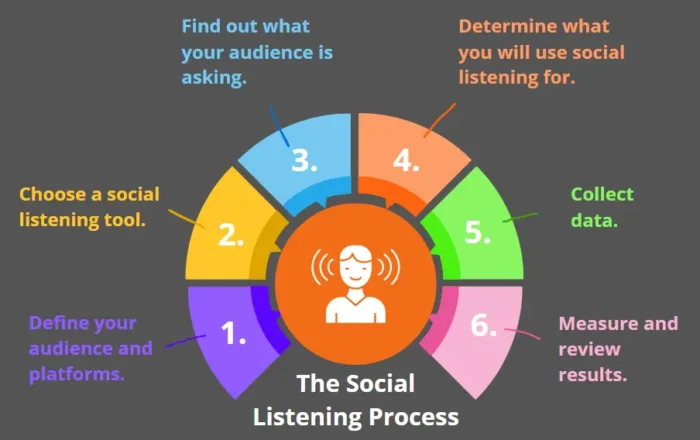
A social listening tool is a software or platform designed to monitor, analyze, and interpret online conversations and activities across various social media platforms, forums, blogs, and websites. It helps businesses and individuals understand public sentiment, track brand mentions, identify trends, and gather insights about their audience or industry. By using data analytics and artificial intelligence, these tools provide actionable information to improve marketing strategies, customer service, and overall brand reputation.
How Does a Social Listening Tool Work?
Listening tools operate by collecting and analyzing data from multiple online sources. Here’s how they work:
- Data Collection: The tool scans social media platforms, blogs, forums, and news sites for mentions of specific keywords, hashtags, or brand names.
- Data Analysis: Using AI algorithms, the tool categorizes and interprets the data to identify sentiment, trends, and key topics.
- Reporting: The tool generates reports and visualizations, providing actionable insights for decision-making.
Key Features of a Social Listening Tool
Social listening tools come equipped with a variety of features to enhance their functionality:
- Sentiment Analysis: Determines whether mentions are positive, negative, or neutral.
- Competitor Analysis: Tracks competitors’ online presence and performance.
- Trend Identification: Highlights emerging topics and discussions relevant to your industry.
Benefits of Using a Social Listening Tool
Implementing a social listening tool offers numerous advantages for businesses and individuals:
- Improved Customer Engagement: Enables timely responses to customer queries and feedback.
- Enhanced Brand Reputation: Helps identify and address negative sentiment before it escalates.
- Data-Driven Decisions: Provides insights to refine marketing strategies and campaigns.
Popular Listening Tools in the Market
Several tools dominate the social listening field, each offering unique features:
- Hootsuite Insights: Known for its thorough analytics and reporting capabilities.
- Brandwatch: Offers advanced sentiment analysis and trend tracking.
- Sprout Social: Combines social listening with scheduling and engagement tools.
Compare Social Listening Tools for Keyword Alerts

What is Social Listening and Why is it Important?
Social listening refers to the process of monitoring digital conversations to understand what customers are saying about a brand, industry, or specific topics online. It is important for businesses to gain insights into customer sentiment, identify trends, and respond to feedback effectively. Key benefits include:
- Brand reputation management: Track mentions to address negative feedback promptly.
- Competitor analysis: Understand how competitors are perceived and identify gaps.
- Customer engagement: Respond to queries and engage with your audience as it happens.
Top Tools for Social Listening and Keyword Alerts
Several tools are designed to help businesses monitor social media and set up keyword alerts. These tools provide up-to-date data and analytics to improve decision-making. Some of the most popular options include:
- Hootsuite: Offers detailed social media monitoring and scheduling features.
- Brandwatch: Provides advanced analytics and sentiment analysis.
- Mention: Tracks brand mentions across the web and social media platforms.
How to Set Up Keyword Alerts for Effective Monitoring
Setting up keyword alerts is essential for tracking specific terms or phrases relevant to your business. Here’s how to do it effectively:
- Identify relevant keywords: Choose terms that align with your brand, products, or industry.
- Use a reliable tool: Select a platform like Google Alerts or Mention to set up alerts.
- Analyze and act: Review the data regularly and take action based on insights.
Benefits of Using Listening Tools
Using social listening tools offers numerous advantages for businesses aiming to stay ahead in their industry. Key benefits include:
- Improved customer insights: Understand customer preferences and pain points.
- Enhanced content strategy: Create content that resonates with your audience.
- Crisis management: Detect and address potential issues before they escalate.
Choosing the Right Tool for Your Business
Selecting the right social listening tool depends on your business needs and goals. Consider the following factors:
- Budget: Evaluate the cost and ensure it fits your financial plan.
- Features: Look for tools with analytics, sentiment analysis, and instant monitoring.
- Ease of use: Choose a platform with a user-friendly interface and good customer support.
Social Listening Tools FAQ
What are the top listening tools available?
There are several top listening tools available that cater to different needs and budgets. Some of the most popular ones include Hootsuite Insights, which offers complete social media monitoring and analytics; Brandwatch, known for its advanced data analysis and sentiment tracking; Sprout Social, which combines social listening with engagement tools; and Mention, which is great for live monitoring and competitive analysis. Each tool has its unique features, so it’s core to choose one that aligns with your specific goals and requirements.
How can social listening tools benefit my business?
Listening tools can provide significant benefits to your business by helping you understand your audience better, track brand mentions, and monitor industry trends. These tools allow you to identify customer sentiment, gather feedback, and respond to issues instantly. Additionally, they can help you track competitors, uncover new opportunities, and measure the effectiveness of your marketing campaigns. By using these insights, you can make more informed decisions and improve your overall brand reputation and customer engagement.
What features should I look for in a social listening tool?
When choosing a social listening tool, it’s important to look for features that align with your business needs. Key features to consider include up-to-date monitoring, which allows you to track mentions and conversations as they happen; sentiment analysis, which helps you understand the tone of the conversations about your brand; competitor analysis, which provides insights into your competitors’ strategies; and customizable reports, which enable you to analyze data in a way that’s meaningful to your business. Additionally, consider tools that offer integration with other platforms and provide user-friendly interfaces for ease of use.
Are there free listening tools available?
Yes, there are free listening tools available that can be a good starting point for small businesses or those with limited budgets. Some popular free options include Google Alerts, which notifies you of brand mentions across the web; Social Mention, which provides instant social media search and analysis; and Talkwalker Alerts, which is similar to Google Alerts but with a focus on social media. While these free tools may not offer the same level of advanced features as paid options, they can still provide valuable insights and help you get started with social listening.