
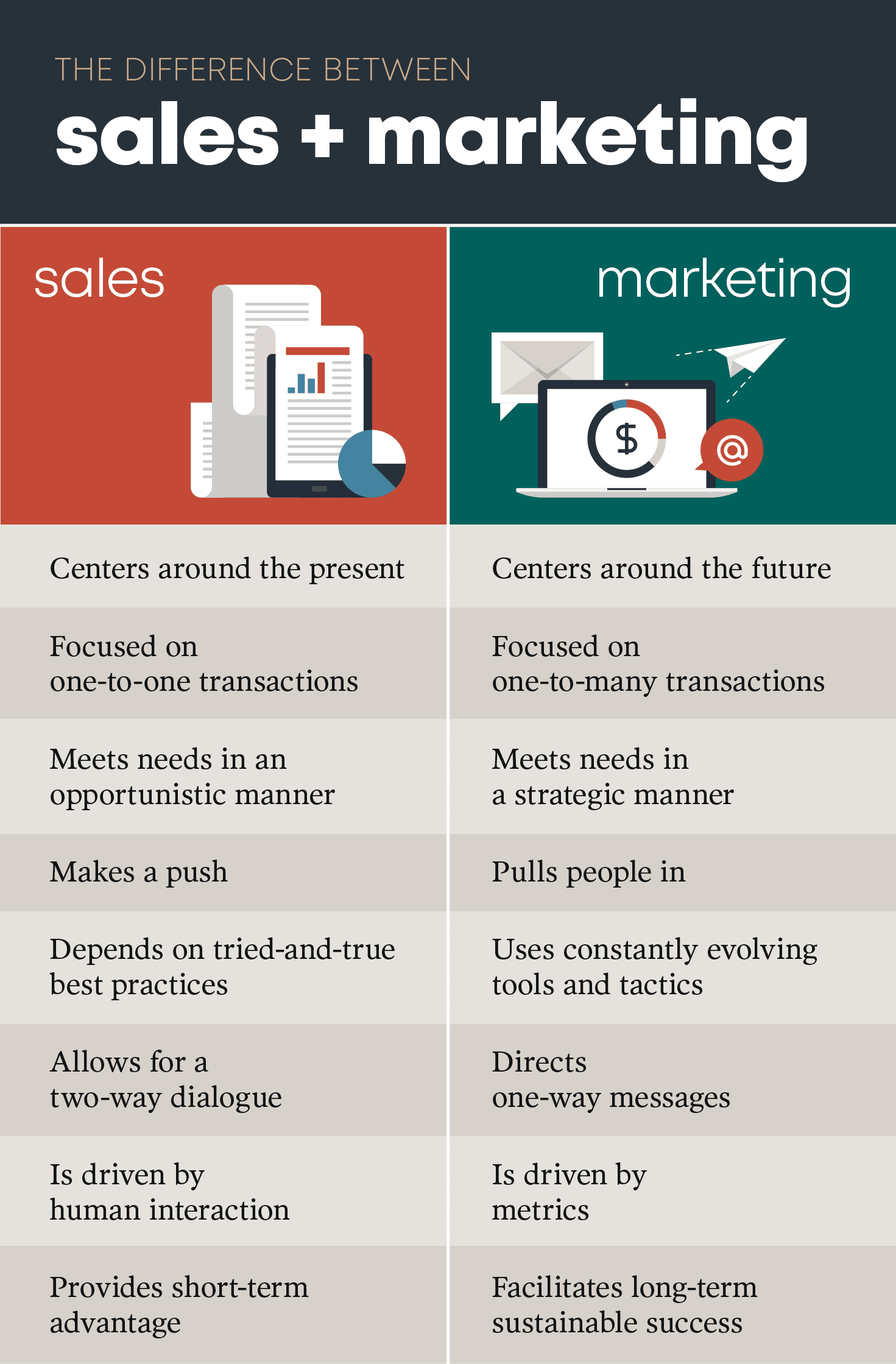

- What's the Difference Between Sales and Marketing?
- What is the main difference between sales and marketing?
- Is marketing higher than sales?
- What is the difference between a sales person and a marketer?
- What are the 5 differences between selling and marketing?
- Frequently Asked Questions from Our Community
Sales and marketing are two essential components of any business strategy, yet they are often misunderstood or used interchangeably. While both aim to drive revenue and grow a company, they serve distinct purposes and involve different processes. Sales focuses on converting leads into customers through direct interactions, negotiations, and closing deals. Marketing, on the other hand, is about creating awareness, generating interest, and building relationships with potential customers through strategic campaigns and content. Understanding the differences between these two functions is crucial for businesses to optimize their efforts, align their teams, and achieve long-term success in a competitive marketplace.
What's the Difference Between Sales and Marketing?
Sales and marketing are two closely related but distinct functions within a business. While both aim to drive revenue and grow the company, they focus on different aspects of the customer journey. Sales is primarily concerned with converting leads into paying customers, while marketing focuses on creating awareness, generating interest, and nurturing potential customers. Understanding the differences between these two disciplines is crucial for businesses to optimize their strategies and achieve their goals.
See Also How Different Is Customer Service Versus Marketing?
1. Core Objectives of Sales and Marketing
The core objective of sales is to close deals and generate revenue by directly interacting with potential customers. Sales teams focus on building relationships, understanding customer needs, and persuading them to make a purchase. On the other hand, marketing aims to create demand for a product or service by identifying target audiences, crafting compelling messages, and promoting the brand through various channels. While sales is transactional, marketing is more strategic and long-term.
2. Key Activities in Sales and Marketing
In sales, key activities include prospecting, lead qualification, product demonstrations, negotiations, and closing deals. Sales professionals often work one-on-one with clients to address their specific concerns. In contrast, marketing involves activities like market research, content creation, advertising, social media management, and email campaigns. These efforts are designed to attract and engage a broader audience.
See Also What Does Product Marketing Actually Do? How Is It Different From Other Types of Marketing?
3. Metrics Used to Measure Success
The success of sales is typically measured by metrics such as revenue generated, number of deals closed, and customer acquisition cost. Sales teams also track conversion rates and average deal size. For marketing, success is measured through metrics like website traffic, lead generation, engagement rates, and return on investment (ROI) for campaigns. Both functions rely on data but focus on different aspects of the customer journey.
4. Tools and Technologies Used
Sales teams often use tools like Customer Relationship Management (CRM) software, sales automation platforms, and communication tools to manage leads and track interactions. Marketing teams, on the other hand, utilize tools such as email marketing platforms, analytics software, social media schedulers, and content management systems (CMS) to execute and monitor campaigns.
See Also Email Marketing Platform Recommendation That Is Similar to Mailchimp?
5. Collaboration Between Sales and Marketing
Effective collaboration between sales and marketing is essential for business success. This alignment, often referred to as smarketing, ensures that marketing efforts generate high-quality leads for the sales team, while sales feedback helps marketers refine their strategies. Regular communication, shared goals, and integrated tools are key to achieving this synergy.
| Aspect | Sales | Marketing |
|---|---|---|
| Focus | Closing deals | Creating demand |
| Key Activities | Prospecting, negotiations | Content creation, advertising |
| Metrics | Revenue, conversion rates | Traffic, engagement rates |
| Tools | CRM, sales automation | Email platforms, analytics |
| Collaboration | Shared goals, integrated tools | |
What is the main difference between sales and marketing?
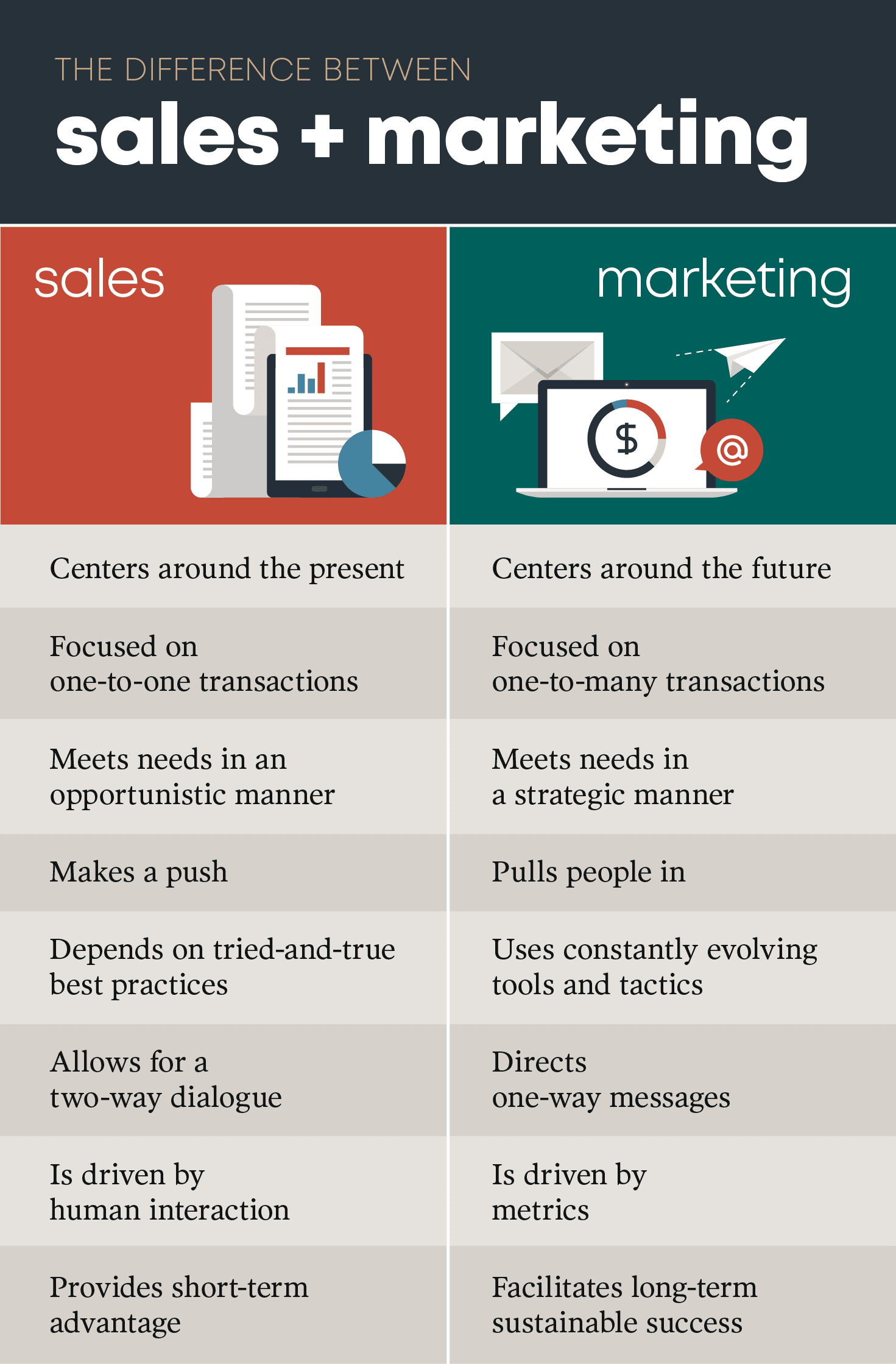
 I Created 4 Graphics Explaining Social Media Marketing.
Understanding the Core Functions
The main difference between sales and marketing lies in their core functions. Marketing focuses on creating awareness and generating interest in a product or service, while sales is concerned with converting that interest into actual purchases. Here are some key points:
- Marketing involves strategies like advertising, content creation, and market research to attract potential customers.
- Sales involves direct interaction with customers, negotiating deals, and closing transactions.
- Marketing builds the foundation for sales by creating demand, while sales fulfills that demand by converting leads into customers.
Timing and Focus
Another significant difference is the timing and focus of each function. Marketing is a long-term process that builds brand recognition and customer loyalty, whereas sales is often a short-term process focused on immediate revenue generation. Consider the following:
See Also Careers that blend creativity with business?
- Marketing campaigns can run for months or even years to establish a brand presence.
- Sales teams work on shorter cycles, aiming to close deals within days, weeks, or months.
- Marketing focuses on the overall market and customer segments, while sales targets individual customers.
Tools and Techniques
The tools and techniques used in marketing and sales also differ significantly. Marketing relies on digital tools, analytics, and creative strategies, while sales depends on interpersonal skills, CRM systems, and negotiation tactics. Here’s a breakdown:
- Marketing uses tools like social media platforms, email marketing software, and SEO tools to reach a broad audience.
- Sales utilizes CRM systems, sales pipelines, and direct communication methods like phone calls or meetings.
- Marketing focuses on data-driven strategies, while sales emphasizes relationship-building and personalized interactions.
Goals and Metrics
The goals and metrics for marketing and sales are distinct. Marketing aims to increase brand awareness and generate leads, while sales focuses on converting those leads into revenue. Key differences include:
- Marketing metrics include website traffic, social media engagement, and lead generation rates.
- Sales metrics focus on conversion rates, average deal size, and revenue generated.
- Marketing success is measured by long-term growth, while sales success is measured by immediate financial results.
Collaboration Between Teams
Despite their differences, marketing and sales teams must collaborate effectively to achieve business success. Their interdependence is crucial for aligning strategies and achieving common goals. Important points to note:
- Marketing provides sales with qualified leads and insights into customer behavior.
- Sales provides feedback to marketing on customer needs and preferences, helping refine campaigns.
- Both teams must align on messaging, target audiences, and overall business objectives to ensure seamless operations.
Is marketing higher than sales?
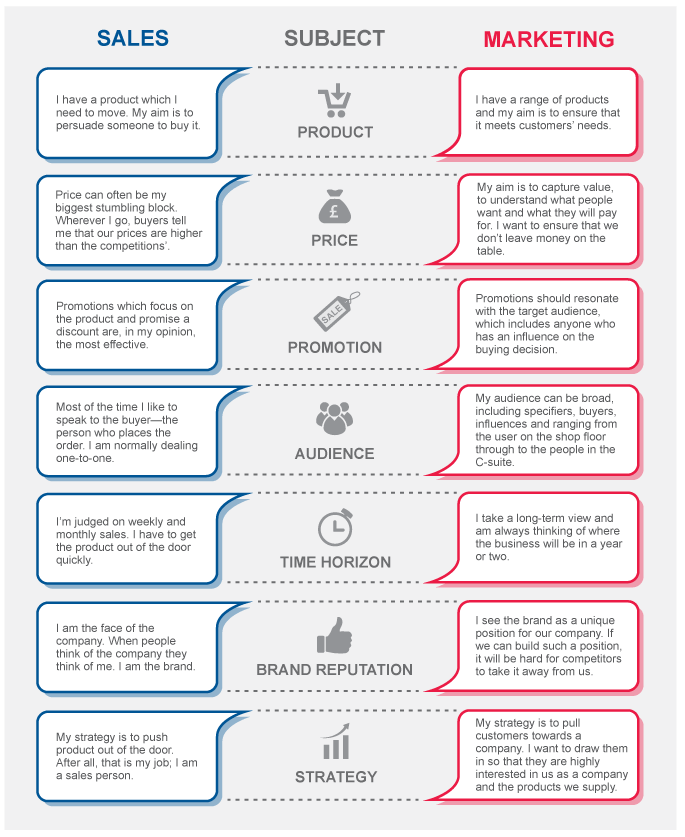
What is the Difference Between Marketing and Sales?
Marketing and sales are two distinct but interconnected functions within a business. Marketing focuses on creating awareness, generating interest, and building relationships with potential customers. It involves strategies like advertising, content creation, and market research. On the other hand, sales is the process of converting leads into paying customers through direct interactions, negotiations, and closing deals. While marketing sets the stage, sales executes the final transaction.
- Marketing is about creating demand.
- Sales is about fulfilling that demand.
- Both functions are essential for business growth.
Is Marketing More Important Than Sales?
The importance of marketing versus sales depends on the business context. Marketing is crucial for building brand awareness and attracting potential customers, while sales is vital for converting those leads into revenue. In some industries, marketing may take precedence, especially in highly competitive markets where differentiation is key. However, in industries with direct customer interactions, sales might be more critical.
- Marketing drives long-term brand value.
- Sales ensures immediate revenue generation.
- The balance between the two depends on the business model.
How Do Marketing and Sales Work Together?
Marketing and sales are most effective when they work in harmony. Marketing generates leads and nurtures them through the buyer's journey, while sales takes over to close the deal. Collaboration between the two teams ensures a seamless customer experience, from initial awareness to final purchase. Tools like CRM systems can help align their efforts and track progress.
- Marketing provides qualified leads to sales.
- Sales provides feedback to improve marketing strategies.
- Integration between the two enhances overall business performance.
Can Marketing Exist Without Sales?
While marketing can exist independently to build brand awareness and engage audiences, its ultimate goal is often to support sales. Without sales, marketing efforts may not translate into revenue. However, in some cases, such as non-profit organizations or awareness campaigns, marketing can operate without a direct sales component.
- Marketing can create value without immediate sales.
- In profit-driven businesses, marketing typically supports sales.
- Non-profit organizations may prioritize marketing over sales.
Which Generates More Revenue: Marketing or Sales?
Both marketing and sales contribute to revenue generation, but their roles differ. Marketing creates the foundation by attracting and nurturing leads, while sales converts those leads into paying customers. In terms of direct revenue, sales often has a more measurable impact. However, effective marketing strategies can significantly boost sales performance, making both functions indispensable.
- Sales directly impacts revenue through transactions.
- Marketing indirectly boosts revenue by increasing demand.
- Both functions are interdependent for maximizing profitability.
What is the difference between a sales person and a marketer?
Primary Focus and Objectives
The primary focus of a salesperson is to directly engage with potential customers to close deals and generate revenue. In contrast, a marketer focuses on creating awareness, generating interest, and building a brand to attract potential customers. The objectives of each role differ significantly:
- Salesperson: Aims to meet sales targets and convert leads into paying customers.
- Marketer: Focuses on creating strategies to increase brand visibility and customer engagement.
- Salesperson: Works on a one-on-one basis with clients to understand their needs and offer solutions.
- Marketer: Operates on a broader scale, targeting larger audiences through campaigns and content.
Skill Sets Required
The skill sets required for a salesperson and a marketer are distinct, reflecting their different roles. A salesperson needs strong interpersonal and negotiation skills, while a marketer requires creativity and analytical abilities. Key differences include:
- Salesperson: Excellent communication and persuasion skills to close deals.
- Marketer: Proficiency in data analysis and understanding consumer behavior.
- Salesperson: Ability to handle objections and provide quick solutions.
- Marketer: Expertise in creating compelling content and managing campaigns.
Timeframe of Activities
The timeframe for activities in sales and marketing varies significantly. A salesperson often works on short-term goals, such as closing a deal within a specific period, while a marketer focuses on long-term strategies to build brand loyalty. Key differences include:
- Salesperson: Immediate results are prioritized, such as meeting monthly sales quotas.
- Marketer: Long-term campaigns are designed to create sustained brand awareness.
- Salesperson: Quick follow-ups and responses to leads are essential.
- Marketer: Continuous monitoring and optimization of campaigns over time.
Customer Interaction
The nature of customer interaction differs between a salesperson and a marketer. A salesperson engages directly with customers, while a marketer often interacts indirectly through campaigns and content. Key differences include:
- Salesperson: Direct communication through calls, meetings, or emails to close deals.
- Marketer: Indirect engagement via social media, advertisements, and content marketing.
- Salesperson: Personalized approach to address individual customer needs.
- Marketer: Broad approach to appeal to a wider audience.
Metrics of Success
The metrics used to measure success in sales and marketing are different. A salesperson is evaluated based on revenue generated and deals closed, while a marketer is assessed by brand awareness and lead generation. Key differences include:
- Salesperson: Success is measured by sales volume and revenue targets.
- Marketer: Success is evaluated through metrics like website traffic, engagement rates, and lead quality.
- Salesperson: Focuses on individual performance and customer satisfaction.
- Marketer: Tracks campaign performance and overall brand growth.
What are the 5 differences between selling and marketing?
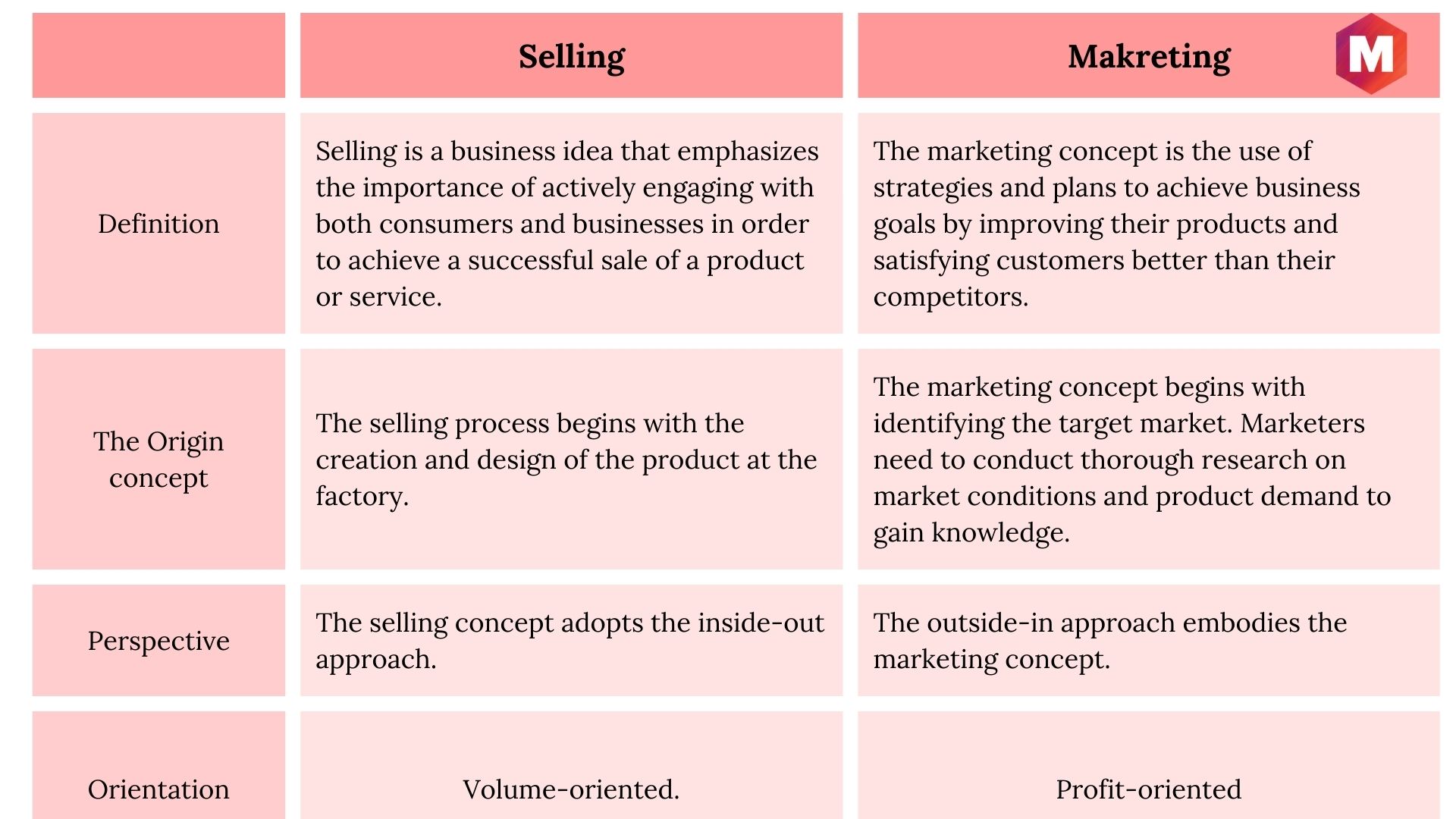
1. Focus and Objective
The primary difference between selling and marketing lies in their focus and objectives. Selling is primarily concerned with converting products or services into cash, emphasizing immediate transactions. Marketing, on the other hand, focuses on understanding customer needs and creating value to satisfy those needs over the long term.
- Selling aims to maximize sales volume and revenue.
- Marketing aims to build brand loyalty and customer satisfaction.
- Selling is transaction-oriented, while marketing is relationship-oriented.
2. Customer Engagement
Customer engagement differs significantly between selling and marketing. Selling often involves direct interaction with customers to close a deal, whereas marketing focuses on creating awareness and interest through various channels before the customer even considers purchasing.
- Selling involves direct communication with potential buyers.
- Marketing uses advertising, social media, and content to engage customers.
- Selling is reactive, while marketing is proactive in attracting customers.
3. Time Horizon
The time horizon for selling and marketing activities is another key difference. Selling is typically short-term, focusing on immediate results, whereas marketing takes a long-term approach, building brand equity and customer relationships over time.
- Selling targets quick conversions and immediate sales.
- Marketing focuses on sustained growth and customer retention.
- Selling is about the present, while marketing invests in the future.
4. Approach to Customer Needs
Selling and marketing differ in how they address customer needs. Selling often pushes products or services based on what the company wants to sell, while marketing pulls customers in by addressing their specific needs and desires.
- Selling emphasizes product features and benefits.
- Marketing focuses on solving customer problems and fulfilling desires.
- Selling is product-centric, while marketing is customer-centric.
5. Tools and Strategies
The tools and strategies used in selling and marketing are distinct. Selling relies on personal selling, negotiations, and closing techniques, whereas marketing employs a mix of digital tools, market research, and strategic planning to reach and influence customers.
- Selling uses direct sales tactics like cold calling and face-to-face meetings.
- Marketing leverages SEO, content marketing, and social media campaigns.
- Selling is manual and labor-intensive, while marketing is automated and scalable.
Frequently Asked Questions from Our Community
What is the primary focus of sales versus marketing?
The primary focus of sales is on directly engaging with potential customers to convert leads into paying clients. This involves activities like one-on-one communication, negotiations, and closing deals. On the other hand, marketing focuses on creating awareness, generating interest, and building a brand's reputation through strategies like advertising, content creation, and market research. While sales is transactional, marketing is more about creating a foundation for those transactions to occur.
How do sales and marketing teams collaborate?
Sales and marketing teams collaborate to ensure a seamless customer journey. The marketing team generates leads through campaigns and nurtures them until they are ready to engage with the sales team. The sales team then takes over to close the deal. Effective collaboration often involves shared goals, regular communication, and the use of tools like CRM systems to track progress and align strategies.
What are the key metrics for sales and marketing?
For sales, key metrics include conversion rates, average deal size, and revenue generated. These metrics help measure the effectiveness of the sales process. For marketing, important metrics include lead generation rates, website traffic, and engagement rates on campaigns. These indicators help assess how well marketing efforts are attracting and retaining potential customers.
Why is it important to differentiate between sales and marketing?
Differentiating between sales and marketing is crucial because each function plays a distinct role in driving business growth. Sales focuses on immediate revenue generation, while marketing builds long-term brand equity and customer relationships. Understanding their differences ensures that both teams can work efficiently and complement each other, ultimately leading to a more cohesive and successful business strategy.
Leave a Reply
Articles of interest